
Solution for Nail Biters
 Submitted by
 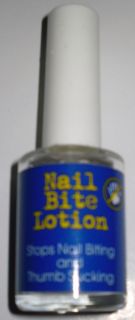 I bought a Nail Bites solution from polyclinic when my girl wudn’t stop sucking her thumb till it bled and left a scar. Self soothe, yes, i get that. But not until she’s like sooo big, right? It was recommended to me by another girlfriend whose son bites his nails.
Looks like nail polish. Easier to trick the girls. Hehee.. But when in mouth… woo-yee-yow! Yee-hah! Bitter as heck and whatever bad habits to do with fingers, hands, nails, FOOT?  …. whatever lah, that likes to be placed in mouth….. it stopped. Period.
One taste of that thing and anyone will just refuse, just stop that bad habit.
Only factor to digest…. cannot pity-pity baby kinda attitude lor… like sayang-sayang my poor thing… Let’s forget about that nail polish, hun… Go bite yer nails all you want…  Wuakakakah! Must be decisive and persevere!
Some product information:
- Pickles Nail Bite Lotion 15ml.
- Directions:
- To stop nail biting, use the brush and apply the lotion around
and under the nails. Allow to dry. Re-apply after washing and
before bedtime. Not suitable for children under 2 years.
- To stop nail biting, use the brush and apply the lotion around
- Ingredients:
- Alcohol denat, Denatonium benzoate, Menthol.
- Precautions:
- Keep out of reach of children. HIGHLY FLAMMABLE. Keep away from sources of ignition. No smoking during application. Avoid contact with eyes. Keep away from polished surfaces. For external use only. The extremely bitter taste may rarely cause nausea or vomiting.
- Manufactured by:
- J Pickles Healthcare. * Knaresborough, HG5 OEA, England.
Found this article when i was having some issues with nail biting and stuff. Just share with you. 
Nail-biting (onychophagia) is a common stress-relieving habit. You may bite your nails in times of stress or excitement, or in times of boredom or inactivity. It can also be a learned behavior from family members. Nail-biting is the most common of the typical "nervous habits," which include thumb-sucking, nose-picking, hair-twisting or -pulling, tooth-grinding, and picking at skin.
You may bite your nails without realizing you are doing it. You might be involved in another activity, such as reading, watching television, or talking on the phone, and bite your nails without thinking about it.
Nail-biting includes biting the cuticle and soft tissue surrounding the nail as well as biting the nail itself.
Who bites their nails?
People of all ages bite their nails.
About half of all children between the ages of 10 and 18 bite their nails at one time or another. Nail-biting occurs most often as teens are going through puberty changes.
Some young adults, ages 18 to 22 years, bite their nails.
Only a small number of other adults bite their nails. Most people stop biting their nails on their own by age 30.
Boys bite their nails more often than girls after age 10.
What treatments are available for nail-biting?
Several treatment measures may help you stop biting your nails. Some focus on behavior changes and some focus on physical barriers to nail-biting.
- Keep your nails trimmed and filed. Taking care of your nails can help reduce your nail-biting habit and encourage you to keep your nails attractive.
- Have a manicure regularly or use nail polish. Men can use a clear polish. Wearing artificial nails may stop you from biting your nails and protect them as they grow out.
- Try stress-management techniques if you bite your nails because you are anxious or stressed.
- Paint a bitter-tasting polish, such as CONTROL-IT or Thum, on your nails. The awful taste will remind you to stop every time you start to bite your nails.
- Try substituting another activity, such as drawing or writing or squeezing a stress ball or Silly Putty, when you find yourself biting your nails. If you keep a record of nail-biting, you will become more aware of the times when you bite your nails and be able to stop the habit.
- Wear gloves, adhesive bandages, or colored stickers whenever possible to remind you not to bite your nails.
- Snap a rubber band on the inside of your wrist when you start to bite your nails so you have a negative physical response to nail-biting.
- Children may bite their nails more often when they are having problems at school or with friends. Talk with your child or his or her teacher about any new stress at school. Children are more likely to stop biting their nails when they understand what may trigger it. It is also important for your child to help choose a treatment method so he or she can use the treatment successfully.
What problems can develop from nail-biting?
Nail-biting can cause your fingertips to be red and sore and your cuticles to bleed. Nail-biting also increases your risk for infections around your nailbeds and in your mouth.
Long-term nail-biting can also interfere with normal nail growth and cause deformed nails.