
The 1st 100 Words
 Submitted by
 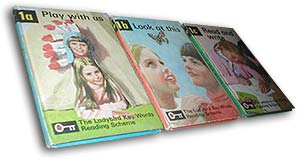 Old-style Ladybird books are word perfect
The Peter and Jane stories of the 1960s taught millions of children to read before falling victim to more progressive methods in schools.
Now the Ladybird series may hold a lesson for today’s generation after a study found that children need to master only 100 words before they can move on to books.
Academics at Warwick University said that teachers were wasting time getting children to learn more words. Instead, just as in the Peter and Jane books, children should master the 100 most common English words and then learn others by reading a wide range of stories.
The Government literacy strategy requires children to learn 158 words by the age of 7. But the study by Jonathan Solity and Janet Vousden, of the Warwick University Institute of Education, found that only 100 of the most common words were needed to tackle any book, including adult fiction and non-fiction.
The classroom time devoted to learning extra words would be better spent on reading real books. Children would develop a love of reading and build up their vocabulary by seeing words in their context.
The study, funded by the Leverhulme Trust, analysed more than 900,000 words from adult and children’s books as well as two reading schemes used in primary schools.
It concluded that only 16 words accounted for a quarter of written English and that children could understand 48 per cent of texts studied by learning 100 high-frequency words.
The extra 58 words set out in the literacy strategy added only between 2 and 4 per cent to pupils’ understanding.
Dr Solity told The Times Educational Supplement that this might explain why seven-year-olds who had learnt the 100 most common words appeared to make little progress with their reading after learning the remaining vocabulary.
He questioned the Government’s decision to order a back to basics approach to teaching reading in schools from September. Ruth Kelly, the Education Secretary, said last week that teachers must adopt a traditional synthetic phonics method in which children learn to build up words before being introduced to books, fast and first. Dr Solity said real books were likely to be more interesting.
100 you need …
a, about, after, all, am, an, and, are, as, at, away, back, be, because, big, but, by, call, came, can, come, could, did, do, down, for, from, get, go, got, had, has, have, he, her, here, him, his, I, in, into, is, it, last, like, little, live, look, made, make, me, my, new, next, not, now, of, off, old, on, once, one, other, our, out, over, put, saw, said, see, she, so, some, take, that, the, their, them, then, there, they, this, three, time, to, today, too, two, up, us, very, was, we, were, went, what, when, will, with, you.
… 58 you don’t
play, cat, day, dog, mum, no, dad, yes, another, ball, bed, been, boy, brother, can’t, dig, don’t door, first, girl, good, half, help, home, house, how, if, jump, just, laugh, love, man, many, may, more, much, must, name, night, or, people, push, pull, ran, school, seen, should, sister, than, these, took, tree, water, way, where, who, would, your.
Source : http://www.theweeweb.co.uk/public/news_ladybird.php?id=156
How to use the Ladybird Key Word series:
http://tamarindphonics.blogspot.com/2008/12/key-words-with-ladybird.html